

What the Fathom is
Ford calls it a midsize electric truck. Think Maverick-size footprint — not a full-size F-150 replacement, a different tool. Four doors, room for five adults, a real pickup bed plus a front trunk where the engine would normally live. Ford projects it will have more passenger volume than a Toyota RAV4 — that’s Ford’s projection, and I’ll label it that way until the production truck is measured.
Underneath is the real story. The Fathom is the first vehicle on Ford’s Universal EV Platform — an electric architecture designed from a clean sheet, not a gas truck converted to batteries. Ford is betting the company’s affordable-EV future on this platform, and the Fathom is where it lands first. It will be built at Louisville Assembly Plant in Kentucky.
Introductory pricing for the entry level Ford Fathom: $29,945
Starting MSRP $28,350 + $1,595 destination and delivery — before options, taxes and fees. That’s the standard-range battery truck, and it’s the only price Ford has announced. What other versions will cost has not been published.
What Ford has confirmed
Every item below is from Ford’s own announcements and its Fathom page at ford.com — not from rumor sites, and not from me.
- The shape of it — Four-door, five-passenger electric pickup. Pickup bed and front trunk. Large high-resolution touchscreen, digital key, Apple CarPlay and Android Auto capable, and every Fathom is BlueCruise capable for hands-free highway driving.
- The battery — A structural battery pack using prismatic LFP (lithium iron phosphate) cells. “Structural” means the pack is part of the truck’s structure and serves as its floor — it’s not just cargo bolted underneath. LFP is the chemistry Ford chose to get cost down; the cells will be produced at BlueOval Battery Park Michigan.
- The electrical system — A 400-volt traction system, and Ford’s first 48-volt low-voltage system (regular vehicles run 12 volts). It’s also the first Ford to come standard with a NACS charge port — the Tesla-style plug — so no adapter is needed at Superchargers.
- Simpler bones — Two large aluminum “unicastings” form the front and rear of the truck, replacing 146 structural parts. Five main electronic modules run the vehicle instead of the 30-plus control units in a typical modern vehicle. The wiring harness is about 4,000 feet shorter and 22 pounds lighter than one of Ford’s first-generation EVs.
- Where it’s built — Louisville Assembly Plant, Kentucky, retooled around the new production system. The battery cells come from Michigan. This is an American-built truck on an American platform.
What it might look like — spy photos and renderings
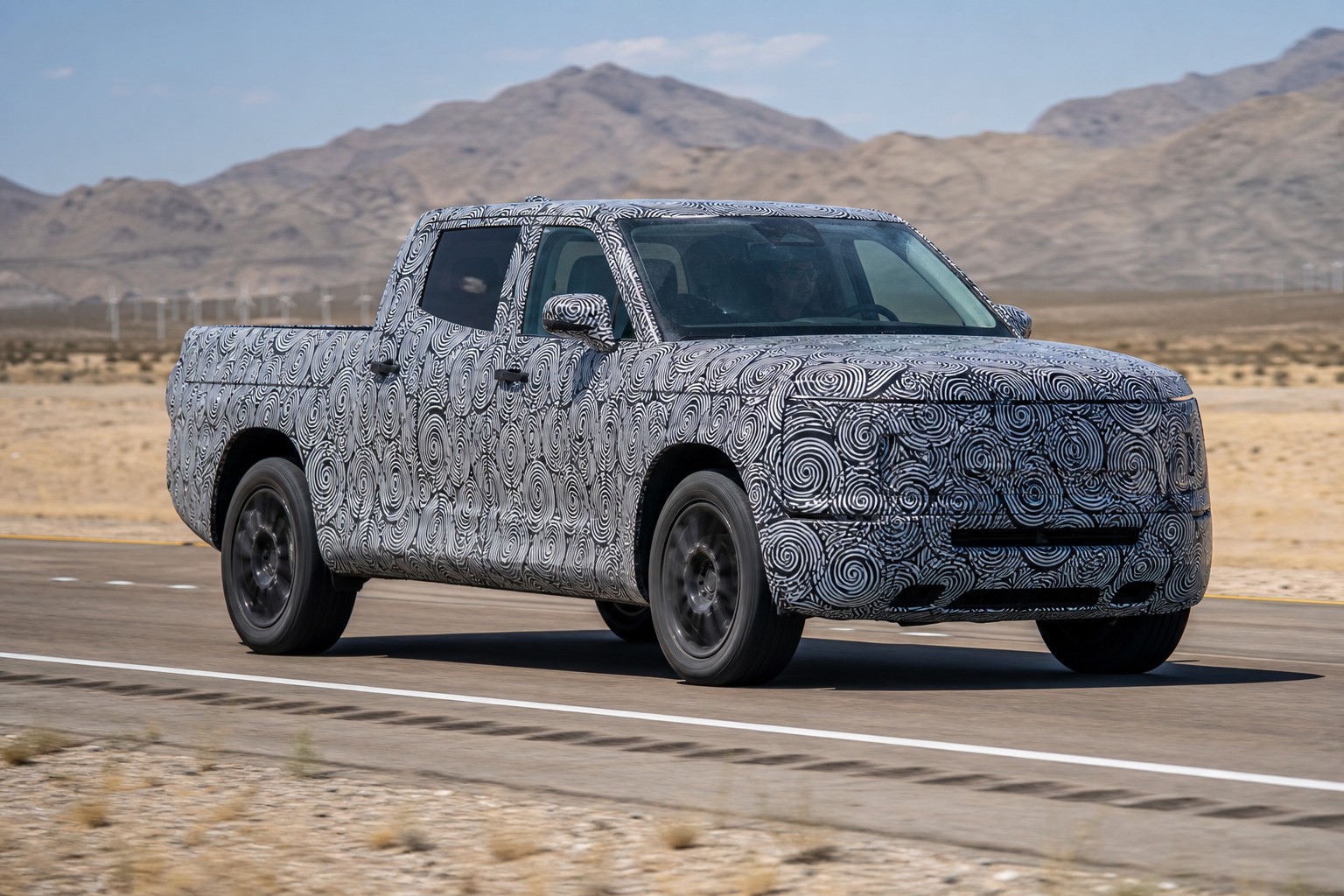
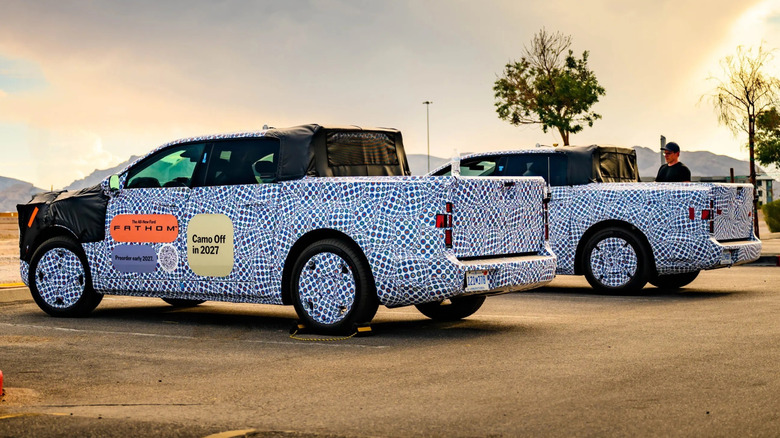
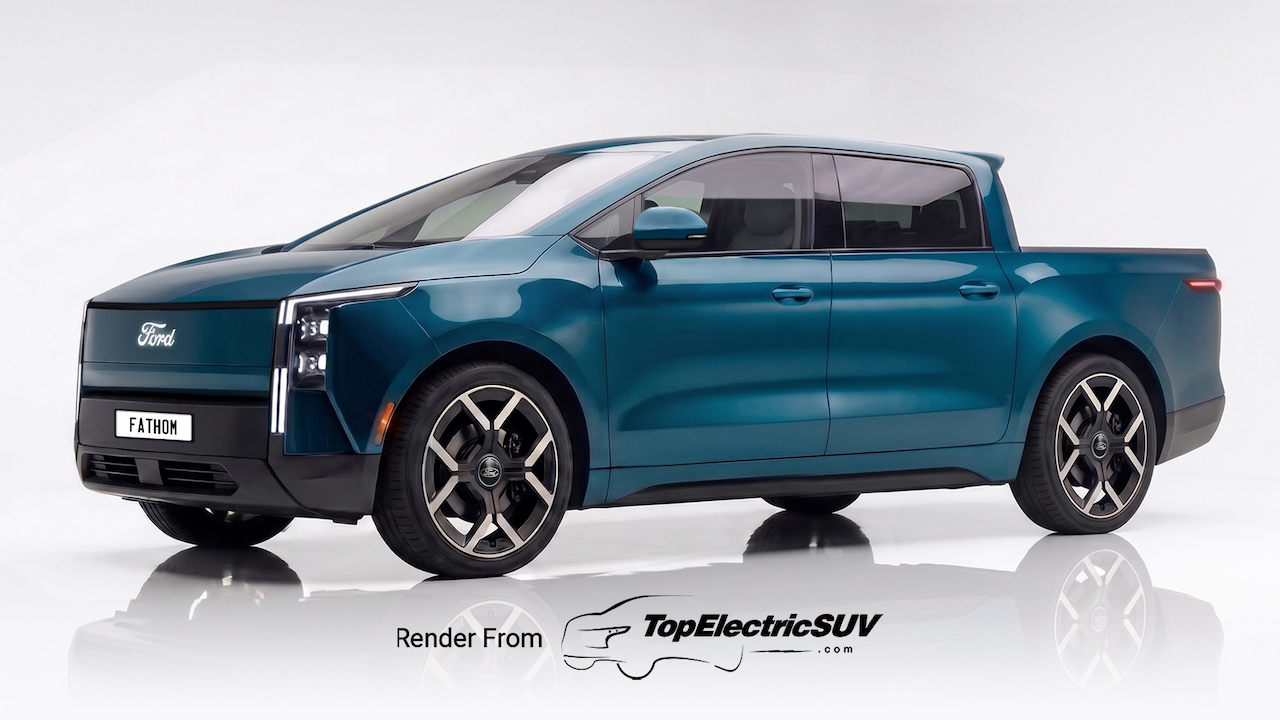
Ford has not revealed the production truck, so everything below is labeled for exactly what it is. The spy photographs are real — camouflaged prototypes caught out testing. The rendering is an independent artist’s best guess, built from those photographs. Neither one is the finished truck, and I won’t present either as if it were.
What we don’t know yet — and I won’t guess
This is the section most pages skip. Ford has not yet announced the following, and anyone who gives you a firm number for any of them today is making it up:
- Battery capacity — Not yet announced. Ford has not published a kilowatt-hour figure for either battery.
- EPA range — Not yet announced. Ford’s own page says the projected EPA-estimated range figures are not yet available. Ford has discussed around 300 miles as a development objective for the platform — that is a target the engineers are aiming at, not a rating, and not a promise for the entry model.
- Horsepower and torque — Not yet announced. Ford has said the truck is targeted to be quick; it has not published figures.
- Towing and payload — Not yet announced. No tow rating, no payload rating, no bed dimensions have been published.
- Trims and all-wheel drive — Not yet announced. Ford has named the entry model and its standard-range battery; the full lineup, and whether all-wheel drive is offered, has not been published.
- The final design — Not yet revealed. Only camouflaged prototypes have been shown. The uncovered production truck is still to come.
When Ford announces these, I’ll put them here with the source. Until then, the honest answer is “not yet announced” — and I’d rather tell you that than sell you a number I can’t stand behind.
Why the platform matters more than the truck
Here’s the idea in one sentence: make the vehicle need less battery to do its job. Batteries are the expensive part of an EV. A bigger battery adds cost and weight, and the weight demands more structure, which adds more weight. Ford’s engineers attacked the circle itself — aerodynamics, wiring, power electronics and manufacturing all designed together, with every change weighed against what it does to range and battery cost.
That’s where the unicastings, the five-module electronics and the 48-volt system come from — and it’s also why Louisville doesn’t build the truck the normal way. Ford calls the new process an “assembly tree”: the front, the rear, and the battery-and-interior core are built on parallel branches and brought together at the end, instead of one long line. Ford’s published targets for the system are 20% fewer parts, 25% fewer fasteners, 40% fewer workstations and about 15% faster assembly. Those are Ford’s targets, not independently verified results — the plant will prove them or it won’t.
Why should you care about factory math? Because it’s how a real truck gets to $29,945 without being stripped to nothing. Ford isn’t selling an expensive truck cheap and eating the loss — it redesigned the truck and the factory together so the price is buildable. Whether it holds up on quality and repair costs is the test still to come, and I’ll say so plainly when there’s evidence either way.
The home-power feature — with the caveat in plain sight
On October 27, 2026, Ford announced the Fathom’s bidirectional power: the truck can send AC power back out to a properly equipped home. Ford projects over 10 kW — enough, in Ford’s example, for the essentials: lights, refrigerator, Wi-Fi, and more — during an outage, or to shift your home’s energy use away from expensive rate hours. The clever part: the inverter is built into the truck, so there’s no separate wall-mounted inverter like the first-generation system needed.
Now the caveat, because it matters: the truck’s price does not buy you a working home-backup setup. You’ll need Ford’s home hardware, professional installation, and in some cases utility approvals — all extra, and Ford has not published final hardware or installation pricing. On Long Island, where a nor’easter can take the lights out for days, this feature could be a genuine reason to buy the truck — but budget for the whole system, not just the truck, and I’ll walk you through what’s known before you count on it.
The timeline, as Ford has stated it
- Now — Ford’s information signup is open at ford.com. Signing up gets you updates. It does not reserve a truck, lock a price, or hold your place in any line.
- Early 2027 — Ford says preorders begin. No exact date has been published, and Ford has not published deposit terms or how allocation will work. A preorder is a step beyond the signup — and it is still not the same thing as an accepted factory order.
- Fourth quarter 2027 — The launch window Ford targeted in its Q3 2026 earnings remarks, with customer deliveries following the launch. A launch window is not a delivery date for any individual truck, and I won’t promise one.
Three different steps — signup, preorder, factory order — and Ford has only opened the first one. When each next step opens, the people on my list hear it from me with the terms as Ford publishes them, not as the internet imagines them.
Get on the Fathom list — two lists, two jobs
Step 1 — Ford’s preorder invite list. Ford is collecting names now for updates and a preorder invitation when ordering opens in early 2027. That list is Ford’s: it gets you Ford’s emails. It does not reserve a truck, lock a price, or put you with any dealer.
Step 2 — Bill’s list at OTIS Ford. This is the list that matters when ordering opens. Preorders run through a dealer you choose — your dealer of record handles your order, your paperwork, and your delivery. Get on my list now and I’ll call you before you submit anything, walk the order through with you step by step, and make sure OTIS Ford in Quogue is the dealer on it. One person, first click to delivery.
Why not just preorder on your own and sort the dealer out later? Because changing dealers after an order is placed is a headache Ford doesn’t make easy. Picking the right dealer up front is the whole game — and it costs you nothing to line it up now.
Building Relationships That Outlast the Transaction.
The Fathom isn’t here yet, and nobody can sell you one today. What I can do is keep you on my list, tell you what Ford has actually announced the day it announces it, and be straight about what isn’t known — the same way I’d want it told to me. When preorders open, you’ll deal with one person at OTIS Ford, family-owned in Quogue since 1946. You’ll deal with Bill.