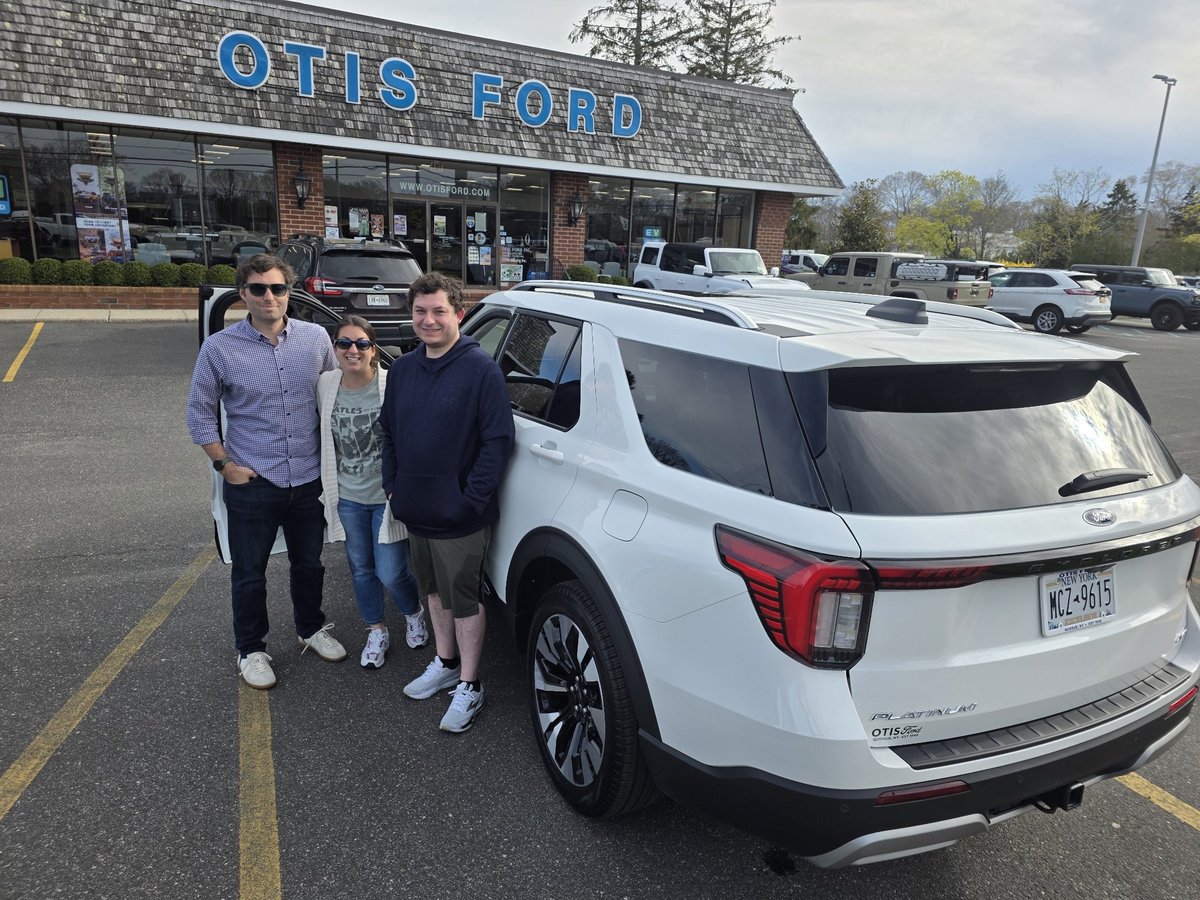
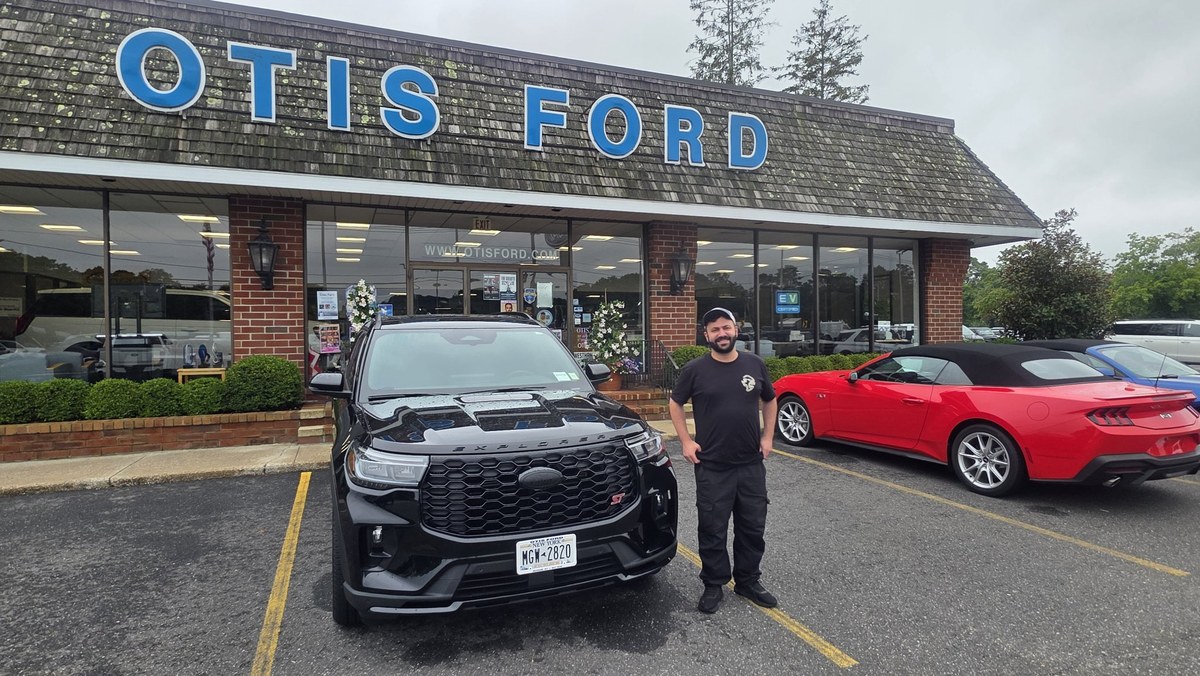
A black Ford Explorer ST at OTIS Ford in Quogue, NY

The Ford Explorer, explained by the guy who sells them

Five trims. Three rows. Zero guesswork.

From Queens to Quogue and Beyond

I’m Bill Seydel — Bill the Long Island Ford Guy at OTIS Ford in Quogue. I’ve spent 15+ years selling Fords, and when a Long Island family needs three rows, the Explorer is where the conversation starts. This page is the whole 2026 lineup the way I’d walk it with you on the lot: Ford’s own numbers, every trim, and straight answers about which one actually fits your family.

Call Bill: 631-860-4553 Text Bill About an Explorer

First, what every Explorer is

Whichever trim you pick, the fundamentals don’t change: three rows in every Explorer, seating for six or seven, the 300-hp 2.3L EcoBoost standard, a 10-speed automatic, the 13.2-inch Ford Digital Experience screen, and Ford Co-Pilot360 driver-assist technology. What changes as you climb the line is the personality — value, sport, off-road, luxury, or performance.

Every 2026 Explorer — even the base Active — tows 5,000 lb.

Ford made the Class III Tow Package standard across the whole lineup: hitch receiver, seven-wire harness, 4- and 7-pin connectors. No tow-package upsell, no asterisks — the boat goes behind any of them.

Every 2026 Explorer trim, in plain English

Ford builds the Explorer five ways. Each card below starts with the trim’s name, a photo of one on the ground at OTIS, and its badge — then my take and the numbers that matter. Same three-row SUV underneath — what changes is who it’s built for.

Active
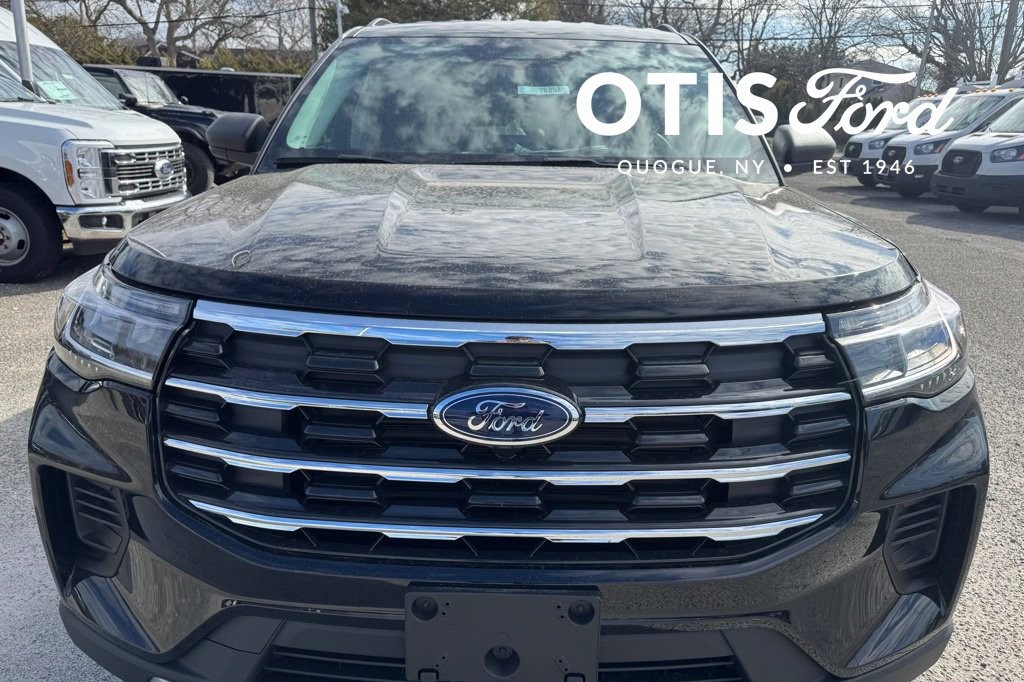
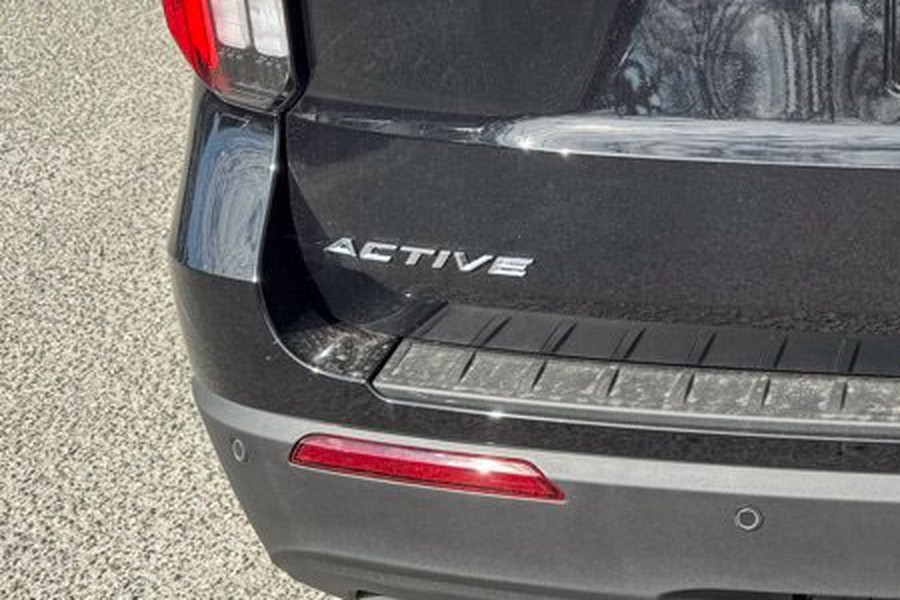
Ford Explorer Active at OTIS Ford, front view Ford Explorer Active liftgate badge

The starting point that doesn’t feel like one — three rows, 300 hp, and the tow package already on it.

This is where most families should start the conversation. You get the 300-hp 2.3L EcoBoost, captain’s chairs in the second row, tri-zone climate control and the Class III tow package, without paying for anything you don’t need. Ford builds it two ways: the 100A keeps the content light and the price honest, and the 200A adds the comfort gear most people end up wanting — heated front seats and a 10-way power driver’s seat among them.

2.3L EcoBoost I-4 · 300 hp · seats 7 · tows 5,000 lb

ST-Line
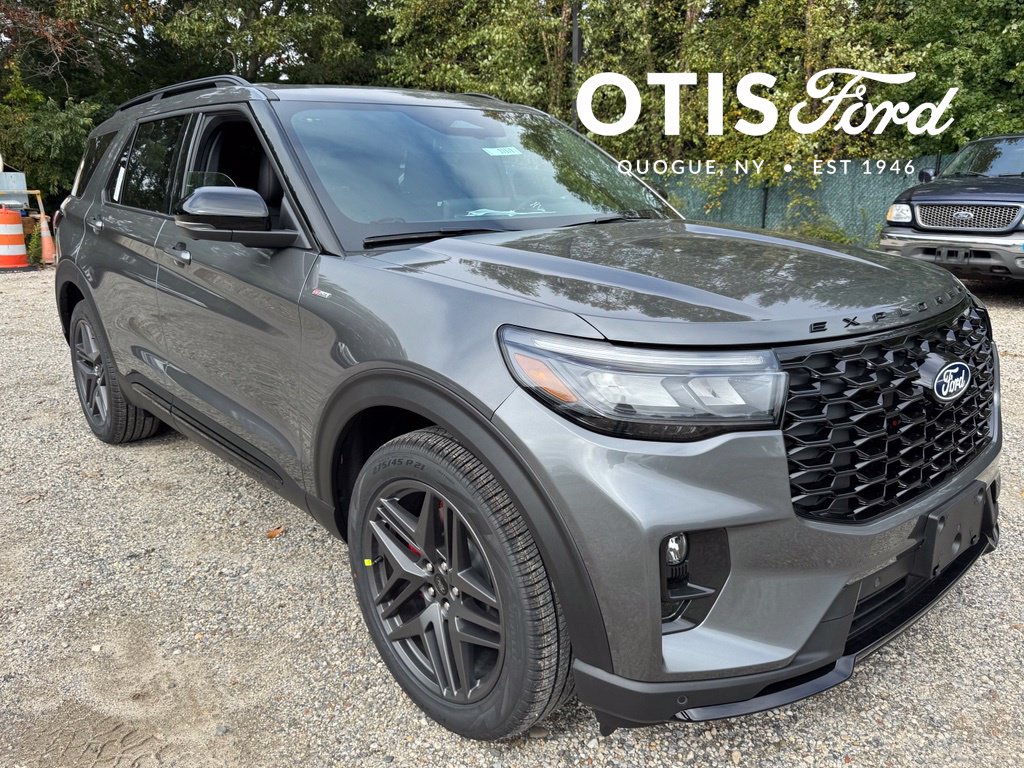
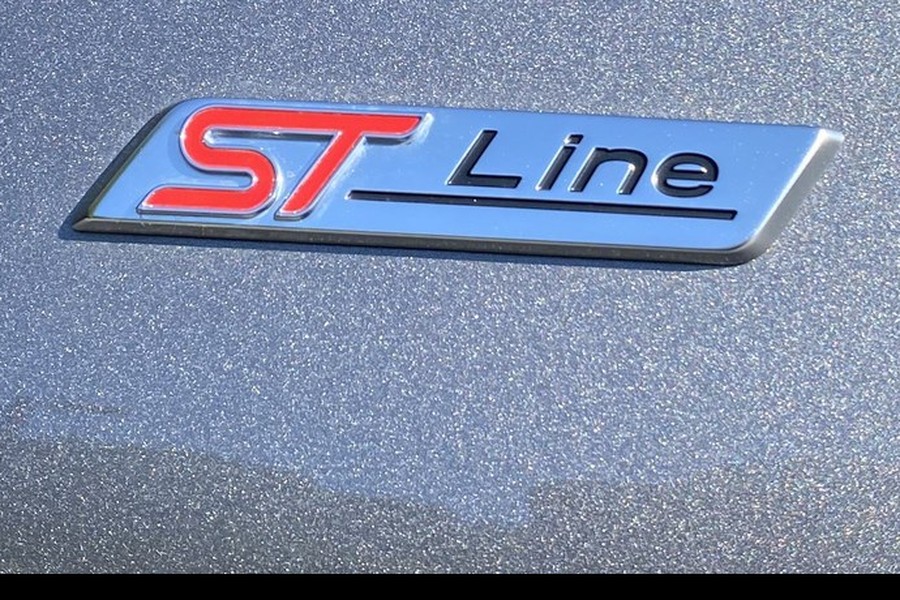
Ford Explorer ST-Line at OTIS Ford, front corner view Ford Explorer ST-Line fender badge

The ST look — blacked out and sporty — with the efficient 2.3L doing the work.

ST-Line is for the driver who loves how the ST looks but doesn’t need its V6 or its appetite: the blackout treatment, 20-inch wheels and the sport stance, with the 300-hp four-cylinder under the hood. One quirk to know before you fall for it — ST-Line is the one Explorer that comes with a second-row bench standard. That’s great if you want the seventh seat, and the captain’s chairs are available if you’d rather have the walk-through to the third row.

2.3L EcoBoost I-4 · 300 hp · seats 7 · tows 5,000 lb

Tremor
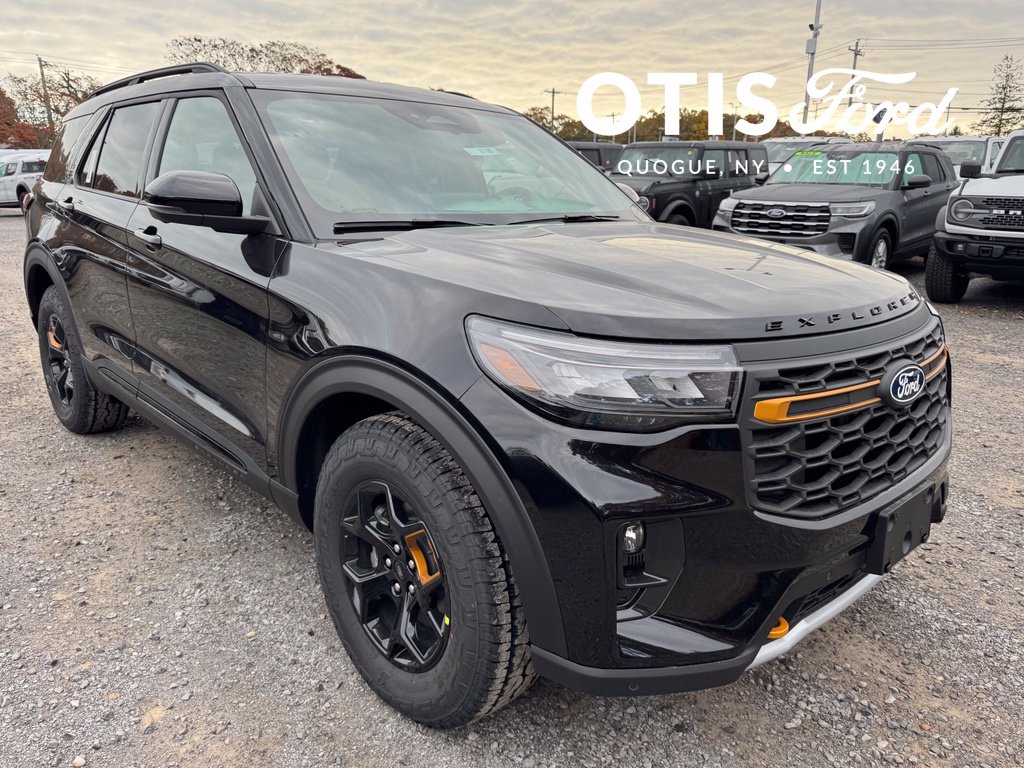
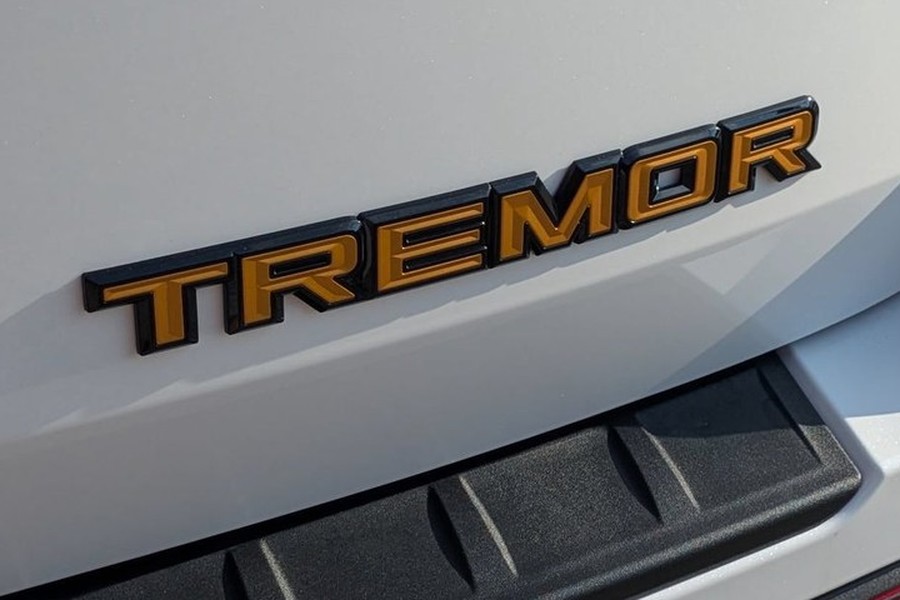
Ford Explorer Tremor at OTIS Ford, front corner view Ford Explorer Tremor tailgate badge

New for 2026 — the first Explorer built to leave the pavement.

Ford finally built the Explorer people keep asking me for: one that isn’t afraid of a dirt road, a February boat ramp, or the unplowed end of a Long Island street. Tremor gets a Torsen limited-slip rear differential, about an inch of lift, all-terrain tires, underbody protection and standard four-wheel drive. It seats six — there’s no bench on this one — and if you want real muscle, the 3.0L V6 is available. Family SUV Monday to Friday, adventure rig on the weekend.

2.3L or available 3.0L · 4WD standard · seats 6 · tows 5,000 lb

Platinum
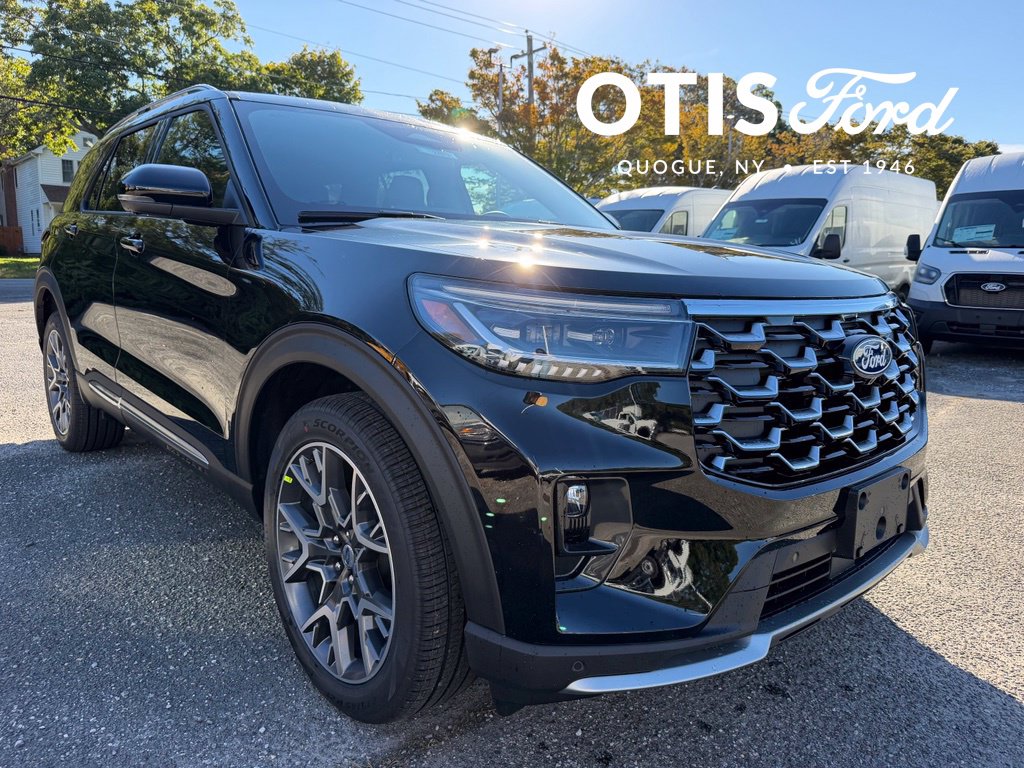
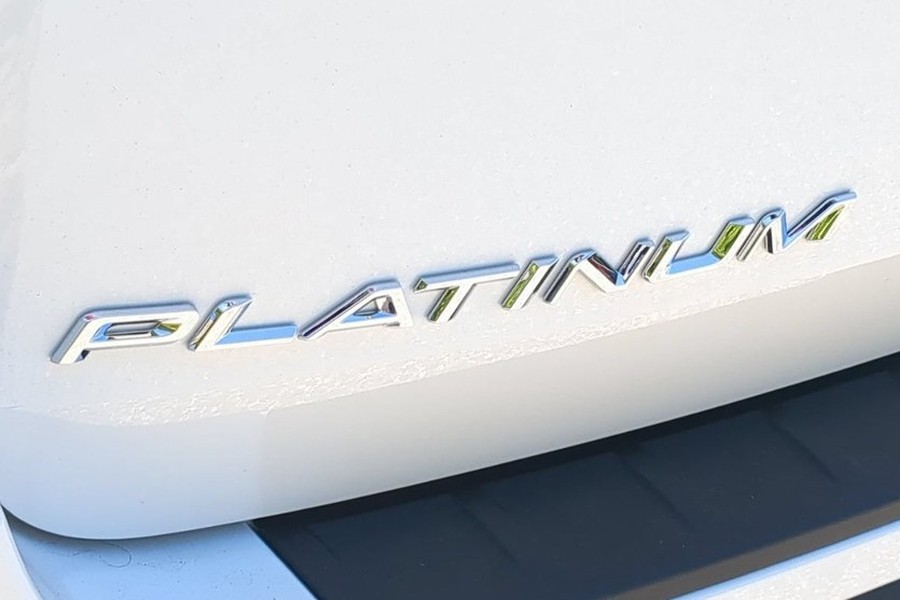
Ford Explorer Platinum at OTIS Ford, front corner view Ford Explorer Platinum tailgate badge

The luxury Explorer — the quiet cabin, the big B&O, and seats that massage you on the way home.

Platinum is the Explorer for people who cross-shop the luxury brands: the 980-watt B&O sound system with 14 speakers, available multicontour front seats with massage, a power-folding third row, and BlueCruise hands-free highway driving standard. One thing to know for 2026 — Platinum runs the 2.3L four-cylinder now; the V6 came off this trim. In the real world it’s 300 hp, it’s plenty, and it sips less fuel doing it. If your heart is set on the V6, that’s the ST, or a Tremor with the upgrade.

2.3L EcoBoost I-4 · 300 hp · BlueCruise standard · tows 5,000 lb

ST
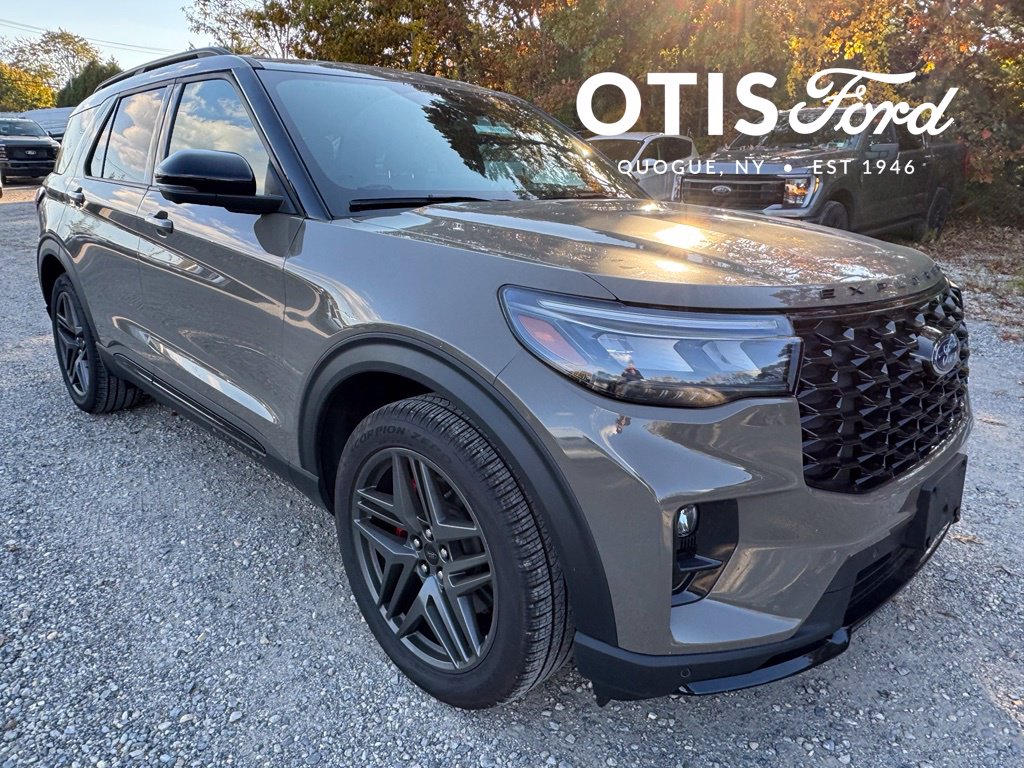
Ford Explorer ST at OTIS Ford, front corner view Ford Explorer ST tailgate badge

The performance Explorer — a twin-turbo V6 in a three-row family SUV.

Yes, it’s a family SUV. It also runs a twin-turbo 3.0L V6 with 415 lb-ft of torque, a sport-tuned suspension, paddle shifters and quad exhaust tips. Ford rated it 400 hp at launch and 385 hp on later builds — there’s a note on that below, because you deserve the straight version. Either way it’s seriously quick for something with a third row, BlueCruise is standard, the third row power-folds, and it still tows the full 5,000 lb. The school run will never be the same.

3.0L EcoBoost V6 · 415 lb-ft · 21-in wheels · tows 5,000 lb

Specs and ratings are Ford’s published figures for properly equipped 2026 Explorers — your SUV’s exact numbers depend on how it’s built, and that’s a five-minute conversation with me, not a footnote.
Built for the way Long Island families actually live

A Ford Explorer with a family at OTIS Ford

Three rows isn’t a spec — it’s a Tuesday. It’s the school run with a car seat and a booster, grandparents in the second row on Sunday, and the whole crew pointed east on the Sunrise Highway in July.

The Explorer’s layout is why families land on it. The second-row captain’s chairs — standard on most trims — give the third row a walk-through, so nobody’s folding a seat and climbing. With all three rows up you still have 16.3 cubic feet behind the third row, which swallows the grocery run without playing Tetris. Fold the third row — a button does it on ST and Platinum — and the space opens up to as much as 85.8 cubic feet for the big hauls. Tri-zone climate control means the front seat, the second row and the third row each get their own temperature, which ends the thermostat wars before they start.

And because this is Long Island, the part nobody puts in the brochure: every trim tows the full 5,000 lb, so the boat doesn’t care which Explorer you picked — and Intelligent 4WD is available on every model for the mornings the plows haven’t caught up yet.

The engines, without the sales pitch

Two engines cover the whole line. Ford’s published numbers:

One honest note about the V6’s horsepower. The 3.0L launched at 400 hp. Partway through the 2026 run, Ford added a particulate filter to the exhaust and the rating on later builds is 385 hp — the 415 lb-ft of torque, the part you actually feel, didn’t change. If the number on the window sticker matters to you, we’ll check the build date on the exact SUV you’re looking at, together. Two minutes, no surprises — that’s how I do it.

Horsepower, torque, towing and fuel-economy figures are Ford’s published numbers for the 2026 Explorer. Towing is 5,000 lb across the lineup with the standard Class III Tow Package — your SUV’s exact ratings depend on how it’s built, and we’ll confirm them on the vehicle itself before you sign anything.

So which Explorer fits your family?

That’s the only question that matters, and it takes about five minutes: how many seats do you actually use every week, captain’s chairs or a bench in the second row, where does it have to go — beach, dirt, snow, or just the expressway — and how long are you keeping it? Tell me those four things and I’ll point you at the right trim and the right engine — including when the honest answer is the cheaper SUV.

Then go look at real ones: see the Explorers on the ground at OTIS Ford → Found one you like? Send me the stock number and I’ll have it pulled up and ready when you get here.

“
Building Relationships That Outlast the Transaction.

One person, first call to delivery — that’s how I sell Explorers at OTIS Ford, family-owned in Quogue since 1946. When you’re ready, you don’t get a rotation of salespeople. You get Bill.

Call Bill Text Bill